Turning Data into Negotiation Power
Negotiating a ServiceNow renewal can feel like a battle of narratives. ServiceNow’s sales reps often tout broad “platform value” stories to justify steep prices.
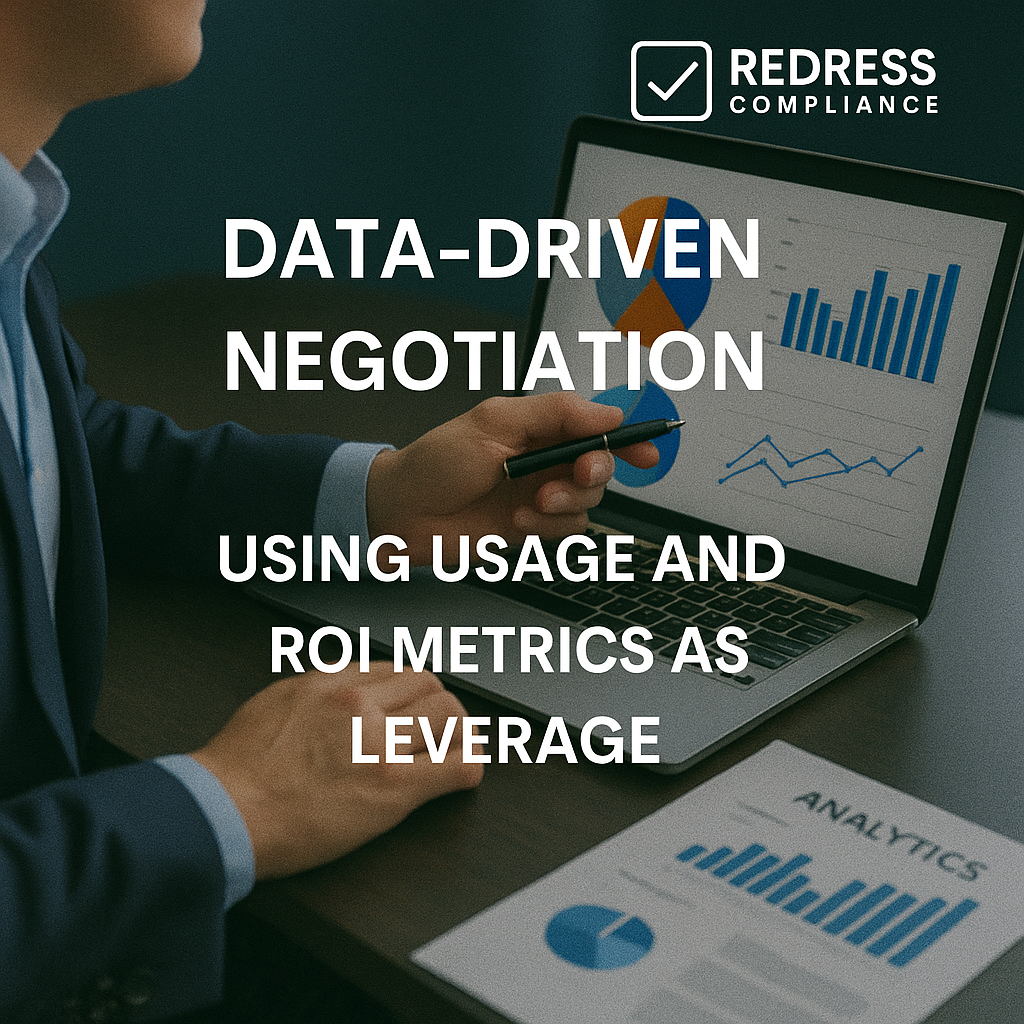
‘Your best counter is hard data. By leveraging your own usage analytics and ROI metrics, you turn the tables and make the renewal an ROI-focused negotiation, compelling ServiceNow to defend its pricing with facts.
Read our ultimate guide, ServiceNow Renewal Negotiation Strategies.
Why ServiceNow Responds to Data
ServiceNow reps are trained to sell a vision – they talk about broad platform benefits and digital transformation. It’s persuasive, but it’s also subjective.
The moment you counter with quantifiable usage data and ROI evidence, you force a reality check. Reps can’t argue with facts – if only 60% of your licenses are actually used, no amount of sales spin can hide the 40% waste.
Shifting the negotiation to focus on return on investment (ROI) moves it from an emotional “value” debate to a rational discussion about actual outcomes.
For example, a global manufacturer discovered that only 68% of its ServiceNow licenses were active in an average month. They showed these facts during renewal discussions and proposed cutting 300 excess licenses. In the end, they saved about $1.2 million. The vendor simply couldn’t refute such clear underuse, so the reduction was accepted.
Pro Tip: Data ends debate — the moment you quantify value, emotion leaves the room.
Building Your Internal Data Baseline
To prepare for a data-driven negotiation, first gather your internal numbers. Focus on three categories of data:
- Usage Data: How people actually use ServiceNow – e.g., number of active users each month, login frequency, module usage, API calls for integrations.
- Financial Data: What you’re paying – total spend, cost per license or module, and any year-over-year price increases.
- Outcome Data: The results you get – key performance indicators improved by ServiceNow (your value realization data), such as faster incident resolution (MTTR reduction), hours saved through automation, or other business outcomes attributable to the platform.
When you combine these, you can see a cost-versus-value picture – for instance, cost per active user or cost per ticket resolved. This baseline turns vague “value” into concrete numbers.
If you find you’re paying $X per active user or $Y per incident resolved, that becomes a powerful talking point. It quantifies efficiency (or lack thereof) and anchors the discussion on measurable value instead of promises.
Pro Tip: If you can’t measure it, you can’t defend it — or renegotiate it.
Key Metrics That Matter
Not all metrics carry equal weight in a negotiation. Focus on the ones that directly link what you pay to what you get. Here are some of the most impactful metrics and how each can strengthen your position:
| Metric Type | Example | Negotiation Use |
|---|---|---|
| License Utilization | % of licenses actively used | Shows how much of what you pay for is actually utilized – argue for license cuts if low. |
| Module Adoption | % of purchased modules in active use | Highlights unused product areas – cut any modules that aren’t providing value. |
| Automation ROI | Hours saved per automation or workflow | Connects to business outcomes – shows hours or dollars saved by each automation. |
| API/Integration Usage | API calls used vs. contractual cap | Well below limits? Negotiate a lower tier. Near or over? Highlight risk of overage. |
| Cost per Active User | Total annual spend ÷ number of active users | Reveals the cost efficiency of the platform – a rising cost-per-user signals declining ROI and bolsters a cost-vs-value argument. |
Each of these metrics turns abstract usage into a story about efficiency. For example, license utilization quickly reveals overbuying – if only 70% of licenses are used, then 30% of that spend is wasted. Meanwhile, cost per active user boils everything down to a single efficiency figure in dollars that executives can grasp.
Pro Tip: If you can express your renewal in cost-per-active-user terms, you’ve already changed the framing of the discussion in your favor.
Presenting Usage Findings to ServiceNow
When it’s time to put your data on the table, approach the conversation as a responsible customer looking for alignment, not as a hostile critic. Frame your findings as governance and optimization efforts on your side. For example: “We’ve analyzed our ServiceNow usage data and trends to ensure our spend stays aligned with our actual needs and ROI.”
Be transparent and factual when you highlight underutilization or inefficiencies. Share straightforward figures like, “Only 62% of our licenses show regular monthly activity.” Then calmly follow with the implication: “Given that, we plan to adjust our renewal quantity to match what’s truly being used.” By presenting the data this way, you’re not blaming ServiceNow for anything – you’re simply acting on good governance.
Pro Tip: The more polished and professional your data presentation, the harder it is for the vendor to dismiss or argue against it.
Latest trends, 2026 ServiceNow Negotiation Trends and How to Capitalize on Them.
Converting Data into Negotiation Language
Backing your position with data is half the battle – the other half is how you communicate it. Use matter-of-fact language that keeps the focus on facts, not feelings. For example:
“Our analysis shows overcapacity in the ITSM module – a number of licenses are going unused.”
“Our ROI doesn’t justify the current per-seat rate.”
Statements like these are simple and factual. They make your point without any emotional charge. Also, avoid phrases like “ServiceNow is too expensive” or “We’re unhappy with what we got.” Such comments only put the rep on the defensive and derail the discussion.
Don’t sound defensive or emotional. Instead, present it as a strategic business decision: “We’re aligning our spend to the value we actually realize.” This shift in wording changes the tone. You’re not pleading or complaining; you’re asserting a data-driven course correction.
Every chart or graph you share should prompt the vendor to provide an explanation. For instance, if a chart shows that the cost-per-ticket-resolved has doubled in the last year, it effectively asks: Why should we pay more for less efficiency? At that point, the onus is on ServiceNow to justify its pricing.
Linking ROI to Future Terms
Your usage and ROI data isn’t just for securing a one-time discount – it can shape future contract terms to give you more flexibility. For example, push for a true-down clause: if your active user count stays 20% below the licensed amount, you can reduce license volume mid-term. That way you won’t keep paying for shelfware.
Similarly, establish performance thresholds. For example: “If our ServiceNow module adoption stays below 75% by next renewal, we can scale down those licenses with no penalty.” This holds the vendor accountable for delivering value, rather than locking you into paying for unrealized potential.
Simply pushing for these data-tied terms shifts the dynamic in your favor. ServiceNow will see you’re serious about not overpaying for unused capacity – which often translates into more flexibility or a deeper discount right now.
Pro Tip: Tie key usage and ROI metrics to your contract clauses – data is the new discount when it comes to holding the vendor accountable.
Great strategies – Leveraging Competitive Alternatives in ServiceNow Negotiations.
What Not to Do
While data is a powerful ally, misusing it can backfire. Avoid these common mistakes when using usage and ROI stats in your negotiation:
- Don’t dump raw data on the table. Dumping a 50-page spreadsheet only invites nit-picking. Instead, summarize the data into clear insights and visuals.
- Don’t get dragged into debating your data on live calls. If a sales rep pushes back on your numbers, pause the meeting. Offer to follow up with the analysis in writing. This keeps you in control of the narrative and avoids off-the-cuff debates.
- Don’t overhype the ROI you have seen. It’s fine to acknowledge improvements, but if you boast “we saved $5 million,” expect the rep to use that against you. Stick to moderate, verifiable outcomes so you don’t undermine your own cost-vs-value argument.
To illustrate, one telecommunications company proudly presented huge efficiency gains from its ServiceNow deployment during a renewal discussion. Instead, a savvy rep turned it around and argued that such a high ROI meant the customer deserved a price increase.
In other words, the customer’s own enthusiastic claims gave the vendor an opening to say, “Look how much value you’re getting – our pricing is fair.” It was a tough lesson – even solid data can be spun if it’s not presented in the right way.
Data is leverage, but only if you control the narrative. By curating the story your numbers tell, you maintain the upper hand.
Data Leverage Checklist
Make sure you’ve covered all these data-driven bases before you negotiate:
- Collect a full year of usage and cost data: Gather the last 12 months of login counts, module adoption rates, license counts, and spending records.
- Calculate key efficiency metrics: For example, cost per active user or cost per used module – numbers that reveal value for cost.
- Identify underused or low-ROI areas: Flag any licenses or modules with adoption below ~70%. These are prime targets for reduction or improvement demands.
- Prepare a concise findings report: Summarize the gap between what you pay for and what you actually use (frame it as a governance review).
- Outline data-tied asks: Plan specific requests (discounts, true-downs, etc.) backed by your data.
In ServiceNow negotiations, numbers don’t just tell your story — they become your shield. When you control the data, you control the deal.
Read about our ServiceNow Negotiation Service.