ServiceNow Audit Clause – Setting Fair Rules for Compliance Checks
ServiceNow audit rights can feel like a looming threat if left unchecked. Without clear limits, a vendor audit can disrupt operations and lead to surprise costs. A fair ServiceNow audit clause lays down when, how, and how often compliance checks happen — keeping them reasonable, not weaponized as a sales tactic.
In other words, strong contract language turns audits from unwelcome surprises into controlled, predictable processes.
For example, a global manufacturer once faced a surprise audit with no notice and an unbounded scope, leading to a six-week disruption. Their contract had no audit controls to prevent this chaos.
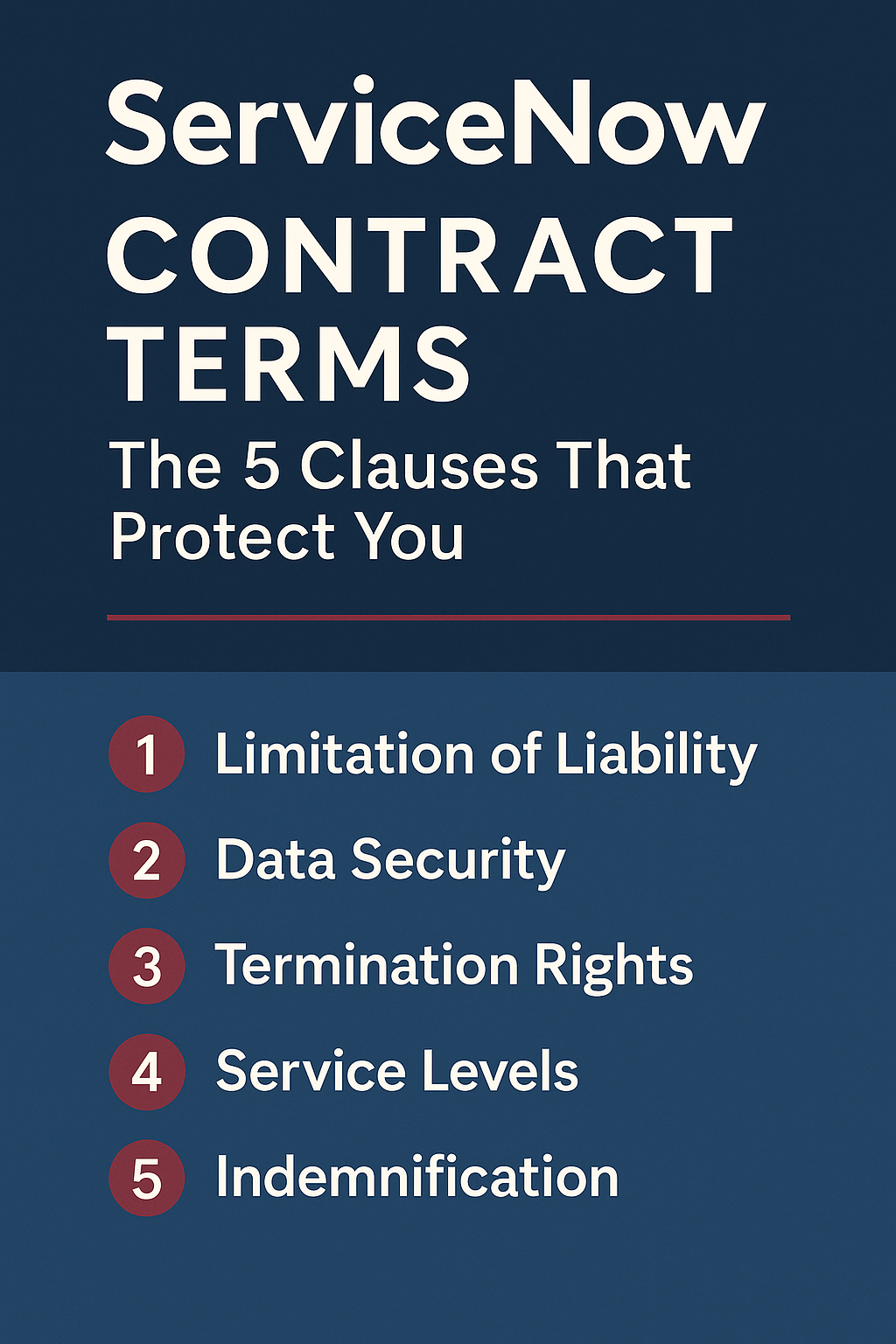
For an overview, read ServiceNow Contract Terms – The 5 Clauses That Protect You.
Pro Tip: An audit should verify compliance — not drive sales.
Why Audit Clauses Matter
Audit clauses define the rules of engagement for compliance checks. Audits themselves are legitimate – vendors need to ensure you’re using licenses correctly. However, a vague audit rights clause in your contract lets vendors overreach. The biggest risk isn’t that you’ll be caught noncompliant; it’s losing control of the process. Without limits, even a compliant organization can be subjected to excessive scrutiny or disruption. By negotiating clear terms, you protect your company from intrusive or repeated audits that consume time and resources.
Checklist: Key protections every audit clause should include:
- Limit audit scope to relevant systems and products.
- Define audit frequency (e.g. no more than once per year).
- Require advance notice and a clear process.
For example, a healthcare firm negotiated a clause to allow audits only once every 12 months, which saved them thousands in consultant hours by preventing surprise spot-checks.
Pro Tip: Define the process before you’re in it.
Limiting Audit Frequency
The first guardrail is capping how often audits can occur. Audit frequency limit language brings stability. Negotiate terms such as: “Vendor may audit at most once per 12-month period, and audits shall not overlap, with at least 30 days’ advance notice.”
This ensures you won’t face back-to-back audits or multiple audits in quick succession under different pretexts. Once per year (or per contract term) is a common, fair limit. It prevents audit overuse and allows your team to operate without constant compliance anxiety.
Checklist: Audit frequency terms to include:
- One audit per year (no more frequent).
- Applies enterprise-wide – covers all licenses/products, so audits can’t be staggered by product line.
- No overlapping audits – a defined rest period (e.g., 12 months) between audits.
For example, a bank added a strict “one audit per year” clause. When ServiceNow attempted a second audit just a few months later, the bank pointed to the contract and successfully deferred it.
Pro Tip: “Once per year” means once per year — enforce it.
Defining Audit Scope
The second critical guardrail is narrowing the scope of the audit. Your audit clause should spell out exactly what the vendor can examine. Limit the audit scope to relevant usage of ServiceNow products you’ve licensed – nothing more. For instance, you might state: “Audit scope is limited to verifying use of licensed ServiceNow modules and related data, within the current contract term.” This prevents “fishing expeditions” into unrelated systems or historical data beyond what’s needed for compliance.
Without clear scope, auditors might request access to sensitive or irrelevant information (like other software, customer data, or systems beyond ServiceNow). Make it clear that they cannot access third-party tools or any data outside of your ServiceNow environments related to licenses.
Checklist: Scope limitations to negotiate:
- Specify systems/modules: Only the ServiceNow products and instances you use under the agreement.
- Current timeframe: Focus on current license period usage (no digging into old data or unrelated projects).
- Exclude sensitive data: No access to customer data, trade secrets, or competitor information on your systems.
For example, a logistics firm restricted the audit scope to its IT Service Management (ITSM) module in the contract. During an audit, ServiceNow’s team requested IT Operations Management (ITOM) logs, but the firm denied it per the agreed scope – keeping the audit strictly to ITSM usage.
Pro Tip: Scope creep starts with silence. Define it early.
Prioritize, ServiceNow True-Down Clause – Paying Only for What You Use.
Setting Audit Notice Terms
Surprise audits cause chaos. Always negotiate audit notice terms so you have time to prepare. Insist on a written notice well in advance – at least 30 days before any audit begins. This notice period gives your team time to gather usage records, coordinate internally, and ensure key people are available to assist. Without a solid notice clause, you could find out about an audit a week before it starts, leaving everyone scrambling.
Also, define when and how the audit will be conducted. Specify that audits occur during normal business hours and have a reasonable duration limit (for example, no more than 10–15 business days of active auditing). By capping the length, you prevent an open-ended audit that drags on indefinitely.
Checklist: Fair notice and timing provisions:
- Minimum 30 days’ written notice before audit commencement.
- Define audit window: Audit activities are limited to a set period (e.g., conclude within 15 business days).
- Business hours only: Audits take place during your normal operating hours to minimize disruption.
For example, a European enterprise once received only one week’s notice of a pending audit, throwing their ITAM team into panic. After that ordeal, they renegotiated the contract to require at least 30 days’ notice for any future audit – no exceptions.
Pro Tip: Notice prevents chaos — 30 days is the floor, not the ceiling.
Agreeing on Methodology and Auditors
ServiceNow may sometimes employ third-party firms to conduct audits. You should have a say in both how the audit is done and who does it. Negotiate a clause that your company must mutually approve any external auditor. This ensures you won’t wake up to unfamiliar consultants combing through your data without consent. In many cases, you can even insist that audits be performed by ServiceNow’s internal team only, or at least that you approve any third-party involvement.
Define the methodology and data handling as well. You might require that all audit activities comply with your security and confidentiality policies.
For instance, specify that any data collected during the audit stays on your premises or is shared securely, and that the auditors sign a non-disclosure agreement (NDA) consistent with your own standards.
Checklist: Auditor and method protections:
- Mutual auditor approval: You must consent in writing to any third-party auditor selection.
- Limit data export: Audit data cannot be removed or shared beyond the audit purpose (e.g. no mass data extraction without permission).
- Enforce NDA: External auditors must abide by confidentiality terms equal to those in your contract.
For example, a finance company learned that ServiceNow planned to send an external audit firm for their compliance check. The company refused to allow any third-party auditors until a strict NDA and data handling protocol was agreed to. Ultimately, ServiceNow accepted their conditions, and the audit proceeded on terms the customer was comfortable with.
Pro Tip: Never let outsiders touch data without consent.
Defining Remedies and Outcomes
Perhaps the most important part of a fair audit clause is clarifying what happens after the audit. Avoid open-ended penalties or punitive true-ups.
Your contract should state that if an audit finds you have unlicensed usage (i.e., you’re short on licenses), the remedy is simply to purchase the necessary licenses in the future at the pre-negotiated rates. In other words, you agree to resolve any shortfall by buying the additional licenses at your contract’s discount pricing — not at some high list price, and without any surprise “back penalties.”
Explicitly rule out retroactive fees or onerous charges. For instance, you can include: “If any license shortfall is identified, Customer will purchase the equivalent licenses at the contract unit price. No additional penalties or fees shall apply provided compliance is promptly restored.” This ensures an audit doesn’t become a profit center for the vendor beyond the cost of the licenses you actually needed.
Also, tie payment timing to verification. You might say any true-up payment is due only after you’ve reviewed and agreed on the audit findings. This prevents scenarios where you’re pressured to pay immediately for alleged overuse that hasn’t been fully confirmed.
Checklist: Outcome terms to include:
- Fair remedy: Purchase any license shortfall at your contracted discount rates (no paying full list price).
- No penalties or fines: No punitive fees, interest, or back-dated maintenance charges on unlicensed use if corrected.
- Verification first: Payment or remediation occurs only after audit results are validated and agreed by both parties.
For example, a tech firm’s contract clause specified that any under-licensing would be handled by selling them additional licenses at their normal discounted rate, with no penalties. When an audit found they needed 50 more user licenses, ServiceNow had to honor the contract. The firm bought the licenses at its pre-negotiated price, and no extra fees were added.
Pro Tip: Fair audits find compliance gaps, not profit gaps.
How to stay in control of your renewal, ServiceNow Renewal Notice Clause – Your Early Warning System.
Summary of Key Audit Clause Protections: The table below outlines major audit clause areas and the recommended fair terms to negotiate for each:
| Audit Clause Aspect | Recommended Fair Term |
|---|---|
| Audit Frequency | Limit formal audits to no more than once per 12 months. |
| Notice Period & Timing | Require at least 30 days’ written notice. Audit to occur during normal business hours and conclude within a defined timeframe (e.g. 15 business days). |
| Audit Scope | Restrict scope to licensed ServiceNow products and relevant systems during the current term. Exclude any data/systems not related to ServiceNow usage. |
| Auditors & Methodology | Vendor’s internal staff or mutually approved auditors only. Auditors must follow your security policies and sign your NDA. No uncontrolled data exports. |
| Remedies for Non-Compliance | If shortfall found, purchase additional licenses at contract pricing. No retroactive penalties or surprise fees, just a straightforward true-up going forward. |
5 Rules for Fair ServiceNow Audit Clauses
- Limit frequency – Allow at most one audit per year, with at least 30 days’ notice so you’re never caught off-guard.
- Define scope – Specify exactly what can be audited (only your ServiceNow environments and modules in use) to prevent fishing expeditions.
- Approve auditors and methods – Require vendor audits to use either internal staff or auditors you agree on, under your security and NDA terms.
- No penalty clawbacks – If an audit finds you need more licenses, you buy them at your normal rate. No inflated back-charges or punitive fees.
- Document everything – Get all audit terms in writing. Never rely on a “handshake understanding” when it comes to audit rights. Written clauses keep everyone honest and the process fair.
Read about our ServiceNow Negotiation Services